Supporting Texts: Psalm 8:6, 110:1; Isaiah 40:26; Matthew 16:18; Luke 24:50-53; Acts 1:9; Hebrews 7:23-25.
This week the President of the United States bestowed the Presidential Medal of Freedom posthumously to Charlie Kirk who was recently murdered by an assassin’s bullet. The Presidential Medal of Freedom is the highest civilian award made by the President of the United States. Congress has a comparable award known as the Congressional Gold Medal. The first Presidential Medal of Freedom was awarded by President Lyndon Johnson on December 6, 1963. Since then, six hundred-seventy-four have been awarded. The Presidential Medal of Freedom is awarded for an especially meritorious contribution to the security or national interest of the United States, world peace, or cultural or other significant public or private endeavors.
Charlie Kirk expressed his ministry mission with the words “Make Heaven Crowded.” By this he meant that the mission of all believers in Jesus Christ is to actively share their faith and bring others to salvation through Christ. It emphasizes the importance of living in a way that points others to God and praying for opportunities to share the gospel. He connected it to Revelation 5:9-10, which says, “And they sang a new song, saying, “Worthy are You to take the book and to break its seals; for You were slain, and purchased for God with Your blood men from every tribe and tongue and people and nation. You have made them to be a kingdom and priests to our God; and they will reign upon the earth.” Ultimately it is a call to action for Christians to engage in evangelism and to compassionately reach out to those who are lost.
This is important to our study of Ephesians because in today’s passage we read that Jesus Christ is “the head over all things to the church.” In this the Apostle Paul announced that the church is the focus and theme of his letter to the Ephesians. From this theme emerges two main ideas regarding the church. The church must reach the lost for Jesus Christ and it must make new believers into disciples by teaching them to be obedient to the commands of their Savior. In this he follows the pattern established by the Lord Jesus in the gospels. In Luke’s gospel, the Lord Jesus commanded, “that repentance for forgiveness of sins would be proclaimed in His name to all the nations, beginning from Jerusalem” (Luke 24:38). Local churches must therefore reach out to their communities with the gospel message of salvation and forgiveness by proclaiming that people must repent from their sins and believe in Jesus Christ as Savior.
In Matthew’s gospel, Jesus said, “Go therefore and make disciples of all the nations, baptizing them in the name of the Father and the Son and the Holy Spirit, teaching them to observe all that I commanded you” (Matthew 28:19-20). In this mandate, the Lord Jesus expressed His desire that all who come to Him by faith become disciples or learners about Him and that they be properly baptized and taught to obey all that He commanded. Consequently, the ministry of every local church must revolve around these two aspects of evangelism and making disciples.
Today we will consider three the ministry of local churches by first looking at the basics of church ministry and then the distinction of God’s great power in forming the church. Finally, we will focus the display of God’s amazing power that He applies throughout the Age of the Church.
BASICS OF THE NEW TESTAMENT CHURCH.
Six Pictures of the Church. The doctrine of the church is strictly a New Testament teaching. The church did not exist in the Old Testament. This is found in the fifth chapter of Ephesians where Paul described Christ and the church as a mystery. This mystery was a divine fact hidden in the Old Testament but revealed in the New. In the second chapter of Ephesians, we find that God has placed Jews and Gentiles together into this one new body called the church. Verse sixteen tells us that He “reconciled them both in one body to God through the cross.” The first mention of the church is in Matthew 16:18 where Jesus said, “I also say to you that you are Peter, and upon this rock I will build My church; and the gates of Hades will not overpower it.” The only other place in the four gospels where the church is mentioned is two chapters later in Matthew 18, which describes church discipline. The church is actually born on the Day of Pentecost after the ascension of Jesus in Acts chapter two. On that day the promise Jesus made about the Holy Spirit was fulfilled and with the Holy Spirit’s ministry through the disciples, thousands of Jewish people came to faith in Jesus as their Savior and Messiah and the ministry of the church began. Later, local churches were founded among the Samaritans, in other areas of Palestine and in Syria. Through the missionary efforts of Paul and others, the gospel was taken to Asia Minor, Greece, and Rome, where dozens of churches were founded, all with the same mission of reaching people for Christ and making them into disciples.
Throughout the New Testament, illustrations or pictures are used to describe aspects of the church. In John 10:1-15, the Lord Jesus describes Himself as the Good Shepherd and the church as His flock. In John 15:1-10, using the picture of the vine and branches, Jesus described the requirement that the church must completely rely on Him as the One who supplies strength to the church in order to produce spiritual fruit. In Ephesians 2:20-22, the church is described as a building with Jesus Christ Himself as the corner stone and His building will inevitably grow into a holy temple in the Lord. In that same chapter, the church are members of God’s household.
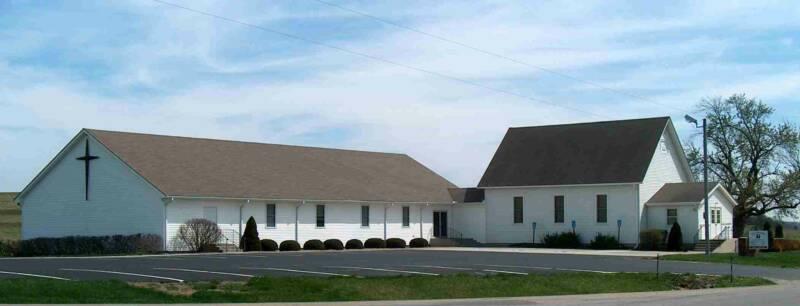
Yet another picture is found in the book of Ephesians. In chapter five, the church is seen as the bride with the Lord Jesus seen as husband. In Colossians 1:13, the church is seen as the kingdom of God’s beloved Son. These metaphors give us a clear picture of how the Lord Jesus relates to us as members of His church. Modern culture has an incorrect and unclear picture of the church that often leads to sloppy theology. Many people think they “go” to church. That statement is inaccurate. This building is not the church. The church meets in this building. The pews and the pulpit and the communion table are not the church. The church sits in the pews, listens to messages from the pulpit, and takes the Lord’s Table together from the communion table. The church is not an inanimate object, nor a denomination, nor an association. It is a spiritual body. The redeemed men and women, boys and girls who meet here are the church. If you are a Christian, you are the church.
The Church Is the Body of Christ. Yet here, in Ephesians one, Paul used the picture of the church being the body of Christ over which Jesus is the head. Since the Lord Jesus is the head, He gives life to the body. If the head is separated from the body, the body no longer has life. The church, then, must continually strive to maintain a vital union with Jesus Christ, the head. Every true believer is in Him and one in Him. In Him we receive all our necessary resources, all of our strength and wisdom. Every instruction the church needs to survive and to thrive comes from the head. First Corinthians 12:13 tells us, “For by one Spirit we were all baptized into one body, whether Jews or Greeks, whether slaves or free, and we were all made to drink of one Spirit.” This is the baptism of the Holy Spirit that places each and every believer into the body of Christ. A Christian comes into the body of Christ at the moment of his or her salvation, being placed there by the energy of the Spirit. The Holy Spirit regenerates all believers and places them into the body of Christ.
Three Vital Aspects of the Church. The New Testament teaches that there are three vital aspects of the church that are necessary for it to function as God intends it to function. First is unity. The people of the church, and by that, I mean the local church, must see itself as one under the Lord’s leadership. In chapter four of Ephesians, we find we are responsible for unity because there we find that we must be “diligent to preserve the unity of the Spirit in the bond of peace.” For this unity, we must all exercise humility and gentleness, with patience, showing tolerance for one another in love.
A second vital aspect, also found in Ephesians chapter four is diversity. God has gifted today’s church with evangelists and pastor-teachers. It is their task to equip the saints. The gifted believers, adequately and spiritually equipped are to work together for the building up of the body of Christ. The third vital aspect is harmony. Every Christian in the body, the local church, is called to work together with the rest. In Ephesians four we read, “The whole body, being fitted and held together by what every joint supplies, according to the proper working of each individual part, causes the growth of the body for the building up of itself in love” (Ephesians 4:16). These three vital aspects form a triad necessary for the church to grow: unity, diversity, and harmony. We are workers together with God.
THE DISTINCTION OF GOD’S GREAT POWER. Ephesians 1:19-20a
The Purposes of Wisdom and Revelation. Let’s look again at our verses for today. Verse eighteen tells us that Paul prays that “the eyes of our hearts may be enlightened.” In the present day, God wants us to know about His great power that He intends to work within us through the indwelling Holy Spirit. So, in verse nineteen, he stacks up four words about power and energy to help us understand how He intends to work through believers in the church. He does this several times in this Ephesian letter. In fact, he will do it again in verse 21. He does this because first century writers did not have some of the techniques we have to emphasize words. They did not underline, italicize, bold, place words in quotation marks, or use different colors. But they could stack words to make sure the readers would fully comprehend their message. In this case, Paul stacked four words regarding supreme sovereignty: power, working, strength, and might. All are basically synonyms but they offer a complete picture of the resources available to the church in Jesus Christ.
The first of these words is power! This power of God is directed toward believers. The second word is “working” which, in the original language, is the word from which comes the English “energy” showing that God’s power is energetic. The third word is “strength” which is a power that overcomes resistance, and the fourth word is might which is God’s essential strength which He provides. This magnificent accumulation of words for power underscores the magnitude of God’s “great power” available to Christians. This power is always available and we use it under God’s illumination, through the Holy Spirit and the Word of God.
The Power of the Resurrection. you may ask, how great is this power? Verse twenty tells us that it is the same power used by God in Jesus’ resurrection and ascension. In His grace, that same power and spiritual strength is available to believers. In Philippians 3, Paul said he wanted to know the “power of His resurrection” (Philippians 3:10). So, what is the power of His resurrection?
Resurrection power can be seen in the miracle of Jesus’ raising Lazarus from the dead. In the account of that miracle in the eleventh chapter of John’s gospel, we note that by the time Jesus arrived at Lazarus’ home in Bethany, he had already been dead for four days. He had already been wrapped in grave clothes and placed in a tomb. There was no doubt he was dead and, judging from Martha’s comment, decomposition had already set in. There was absolutely no hope for Lazarus to return to life. As far as can be determined, humanly speaking, Lazarus was dead and would remain dead.
But Jesus applied His supernatural power, power that could immediately restore all of Lazarus’ dead cells and organs. Jesus empowered Lazarus’ lungs to function once more, his heart to pump restored blood and Lazarus returned to life. So real was this resurrection, that Lazarus’ grave clothes were removed and he was free from the bonds of death. That is exactly the same power that is available to the Christian that enables him or her to courageously and victoriously live the Christian life.
THE DISPLAY OF GOD’S GREAT POWER. Ephesians 1:20b-23
Jesus: The Sovereign Authority. In addition to His resurrection, Paul points to the ascension and exaltation of Christ as the source of divine power, which was seen in its most impressive example. The ascension of Jesus is recorded in Acts 1:9, “And after He had said these things, He was lifted up while they were looking on, and a cloud received Him out of their sight.” Ephesians 1:21 alludes to Psalm 110:1, “The Lord says to my Lord: “Sit at My right hand until I make Your enemies a footstool for Your feet.”
The ascension of the Lord Jesus to the right hand of God involves His being exalted above every order of authority, human and angelic, whether in the present age or the future age to come. The words rule and authority, power and dominion show the infinite scope of His complete authority. As we read in Philippians, “For this reason also, God highly exalted Him, and bestowed on Him the name which is above every name, so that at the name of Jesus every knee will bow, of those who are in heaven and on earth and under the earth, and that every tongue will confess that Jesus Christ is Lord, to the glory of God the Father” (Philippians 2:9-11). Verse 21 is another example of one of Paul’s word stacks: rule, authority, power, and dominion, are all synonyms and he uses them here to emphasize the greatness of Jesus’ authority.
In addition, God’s power in Christ is seen in His placing all things under Christ’s feet. Whereas Adam lost his headship over Creation when he sinned, Christ was made Head over all Creation. This will be fully realized in the future. The book of Hebrews tells us, “For in subjecting all things to him, He left nothing that is not subject to him” (Hebrews 2:8).
Jesus: The Head of the Church. God’s power is also seen in Christ in His appointment as Head over the church. Though the final manifestation of Christ’s comprehensive authority over all Creation will be in the future, He is now Head over the fellowship of believers. Also vital in this observation is that since Christ is Head, all things are in subjection to Him. This is the first time the church is specifically mentioned in Ephesians. The church is His body. By “His body” we mean the universal church consisting of all believers from all generations, which is the fullness of Him who fills all in all. The Lord Jesus, who is the Head of the body, fills the church with His blessings.
Christ’s authority is presently being exercised in the church, among those who are true believers, as it has been since the Day of Pentecost. In many ways we see His authority in action and in many ways, He is ruling in ways not so easily observed. But we must know that He is in absolute control of His church and all that it does.
We must remember that the church is the result of the action of the power of God. It is the work of the Holy Spirit that makes us Christians. Since it is the work of the Holy Spirit and done by Him in His own way, it is permanent. We do not pass in and out of the church. Our union with Christ is organic, vital, and spiritual. The Lord Jesus is the Head of the Church. He is the center of the life of the body. There is no life, energy, or power apart from Him. The Lord Jesus fills the body with His own life and His fullness is in every member of the church. As Christians we must realize that however much we may be conscious of our weakness and of the strength of sin within us and around us, and the world, the flesh and the devil – we must realize that all the attributes and power and graces of the Lord Jesus Christ are in us as members of His body. We have been completely identified with Christ. We have been spiritually identified with His death, burial, resurrection and His new life. His new life is our new life.
This blessing is ours to gain benefit. Permit me to illustrate. Just before World War II, in the town of Itasca, Texas, a school fire took the lives of 263 children. Nearly every family in town was touched by the tragedy. During the war, the town remained without school facilities. When the war ended, the town began to expand and rebuild school facilities. The new school featured the finest sprinkler system in the world. Civic pride ran high. Honor students guided citizens and visitors on tours of the new facility in order to show them the finest most advanced sprinkler system technology could supply and money could buy. Never again would Itasca be visited by such a tragedy. The town continued to grow and seven years later it was necessary to enlarge the school. As they added the new wing to the school, they made a stunning discovery – their advanced sprinkler system had never been connected to the water supply. This is a parable of what has happened in many Christian lives: they are not connected to Christ and their lives are spiritually weak and shamefully useless. How about you? Are you connected to the One who is far above all rule and authority and power and dominion? Are you living in submission to the One who is the Head of the Church?